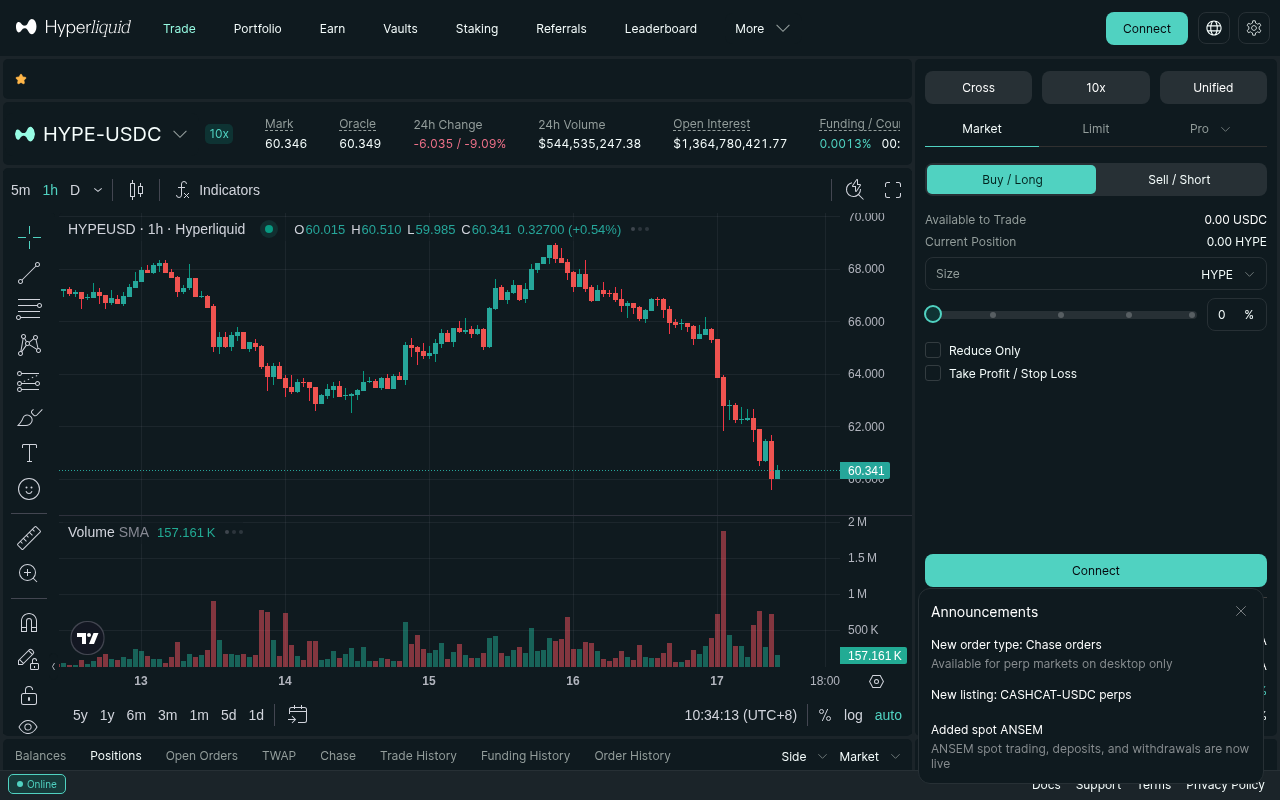
*Evidence: Logged-out mainnet public UI, captured and refreshed automatically each week. Official source.*
Official sources: Hyperliquid funding and the Info endpoint. Checked July 15, 2026.
Journey: Hyperliquid guide hub. Next: reconcile account value and PnL.
Funding cost formula
For each hourly payment:
Like what you're reading? Try it yourself — this link supports ChartedTrader at no cost to you.
Sign up on Hyperliquid →funding payment = position size × oracle price × hourly funding rate
Use the sign returned in account history rather than guessing. A positive cashflow is received; a negative cashflow is paid. Total funding over a trade is the sum of every hourly payment while the position was open.
Example: if a $20,000 long is charged 0.002% for one hour, the approximate payment is:
$20,000 × 0.00002 = $0.40 paid
The next hour can use a different position size, oracle price, or rate. That is why current rate × current notional × hours held is only an estimate.
View and export the real history
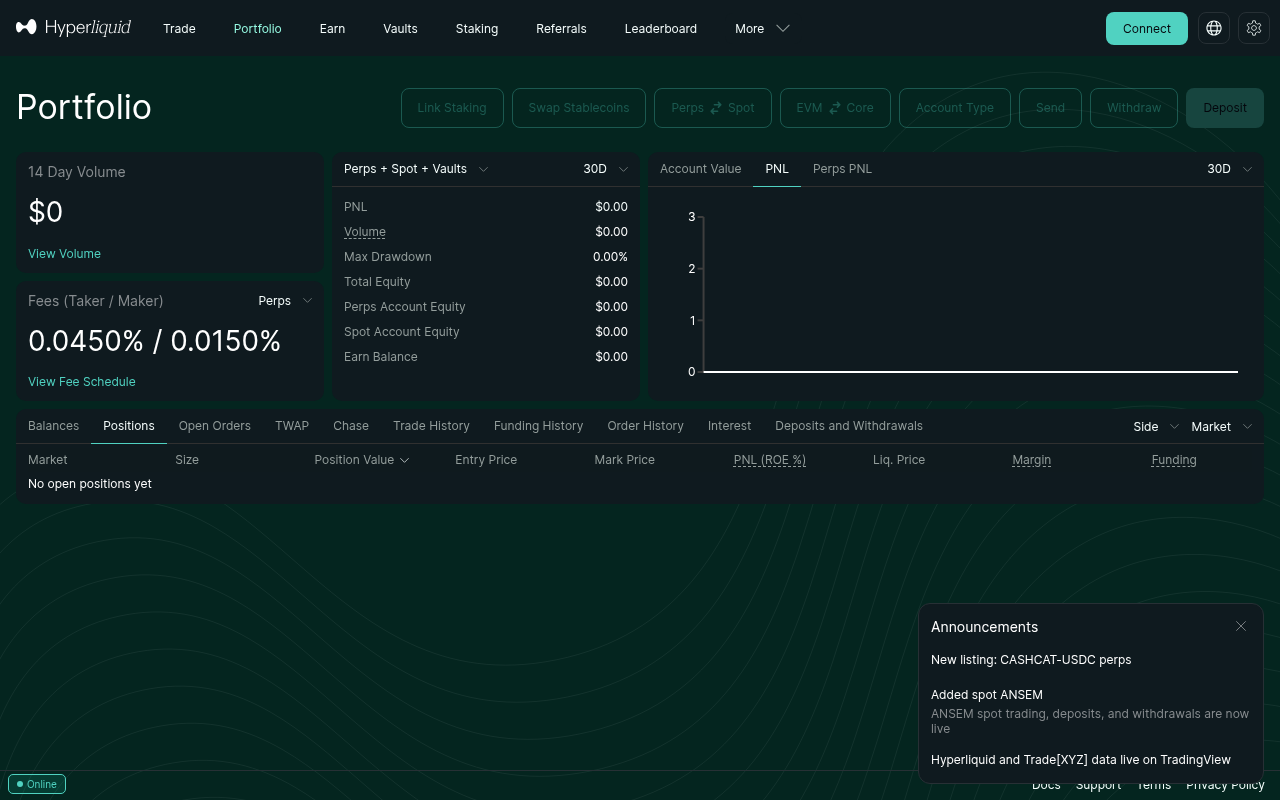
In the official Portfolio interface, open Funding History and use the entries for the account and time window you are reconciling. For repeatable analysis, retrieve the user's funding history through the official Info API and store:
- timestamp;
- asset;
- position size or notional context;
- funding rate;
- funding cashflow;
- account or sub-account being analyzed.
Calculate complete holding cost
Funding is only one component:
net trade result = realized price PnL - trading fees + funding cashflows
Include every partial fill and both opening and closing fees. A position can be profitable before fees while negative after taker fees and funding. Conversely, a short can receive positive funding but still lose more from adverse price movement.
Common mistakes
- Treating Hyperliquid as an eight-hour settlement venue. It settles hourly.
- Using mark price where the official funding formula specifies oracle price.
- Annualizing one unusually high hour as though it were stable.
- Ignoring size changes after partial closes or adds.
- Mixing funding from a sub-account, Vault, or another address into the trade.
- Counting received funding as guaranteed yield while ignoring basis and liquidation risk.
Bottom line
Export the actual hourly history and sum signed cashflows. Use the live rate only for a scenario estimate, never as a substitute for the ledger. Funding arbitrage and long holding periods add basis, execution, margin, and liquidation risks that the rate alone does not show.
Risk warning: Funding rates can change sharply. A funding receipt does not offset an adverse move or guarantee a profitable hedge.